The global beauty and personal care industry is currently valued between $599 billion and $698 billion. We know that marketing for these products is particularly aimed at women. Personally, I’m sick of all the skin care ads in my Instagram feed; the algorhythm knows how old I am and is trying to prey on my insecurities.
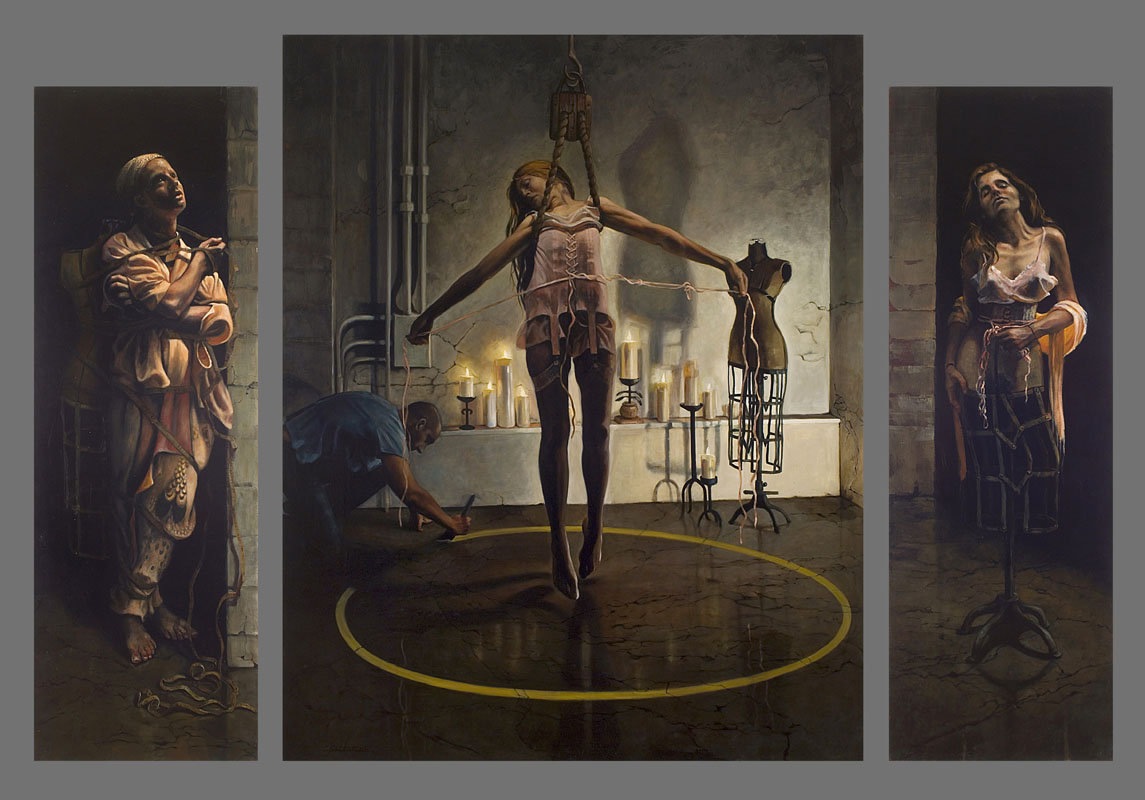
There are a couple works by women artists taking on hyper-commodified femininity. Above is Regina Jacobson’s The Cult of Beauty Altarpiece from 2013. The artist writes that this painting is about the devotion to the idol of beauty and the figures here “need to be considered worthy of acceptance while surrounded by a society that places so much value on appearances and wealth. To depict a sense of inner turmoil I stripped away the veneer of beauty, choosing rather to constrain the vulnerable solo figure in a stark and dimly lit environment. While this allows the viewer an emotional but empathetic perspective of the struggling figure, it also becomes a vehicle to transport the physical narrative to the metaphysical – to a deeply personal place where we wrestle with choices. The symbolic gauge of whether the figure considers herself acceptable or not, worthy or not, is a large yellow circle on the floor. While the circle defines the edges of her desire to measure up to idealized standards, it also hints at the futility of being admired for physical beauty alone.”
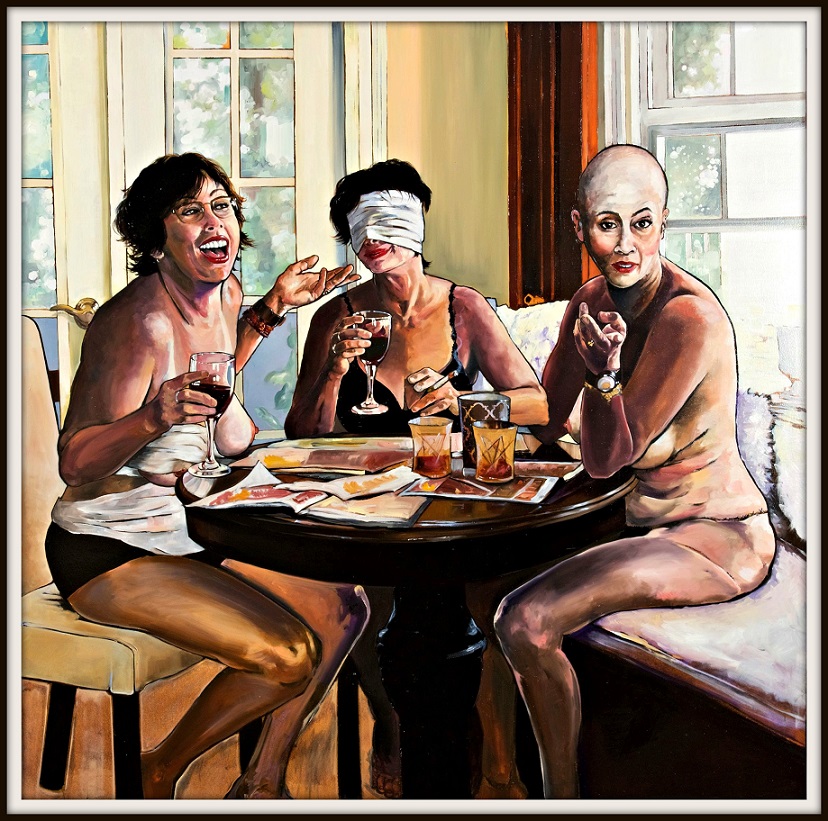
Sherri Wolfgang’s painting Lunching in Westport from 2014 similarly takes on unreasonable standards of beauty and the plastic surgery industry. Wolfgang lives in Westport, CT and painted a series about cosmetic surgery called Twisted. In this painting from the series, three women who have done too much plastic surgery lunch together at a kitchen table in Westport (well, it’s more of a liquid lunch). The women are bandaged from recent surgeries, and the bald woman’s hair fell out after getting too many hair extensions. The three are talking about and supporting one another in the next surgery they will undergo.
Wolfgang writes “Our society’s culture of youth obsession and physical beauty has taken its toll on American women’s self-image and esteem – to the point of twisting and distorting their own bodies and minds.”